
In this blog:
Learn how argon gas helps insulate windows and improve their energy efficiency.
- Discover how argon gas between window panes slows heat transfer to keep your home comfortable in all seasons.
- Understand how argon works alongside other window features like Low-E glass, spacers and seals.
- Find out how argon is a long-lasting, cost-effective perk to have as part of an energy-efficient window package.
- Learn why Denver’s elevation matters when selecting argon-filled windows and planning their installation.
If you’re searching for replacement windows and see “argon gas” in the description, you might wonder what it’s doing there. Argon gas in windows is actually an important energy-efficiency feature, and it can help protect your home from heat intrusion that causes a heavier utility burden. In a place like Denver, where temperature fluctuations are very common, the added insulation argon provides is a great benefit if you want to nurture more comfortable spaces.
When you’re weighing the various perks provided by new windows, it’s worth considering whether argon gas fill should be in your final package. Below, we’ve outlined details of argon in windows, how it works and why it’s worth considering in your next home upgrades.
Argon Gas in Windows at a Glance
Argon gas in windows is fairly easy to understand. We’ve put together the quick reference guide below to lay things out simply, but keep reading to dig more into the details of what you need to know.
| Question | Quick answer |
| What is argon gas in windows? | Argon is a clear, inert, nontoxic gas used between the panes of a sealed insulated glass unit. |
| What does it do? | Slows heat transfer through the panes better than simple air. |
| Is it Low-E glass? | No. Argon is a gas used between panes. Low-E glass is a separate glass coating. |
| How does it help? | By reducing heat transfer, argon helps stabilize interior temperatures and reduce HVAC strain, making your home more energy efficient. |
What Does Argon Gas Do Between Window Panes?
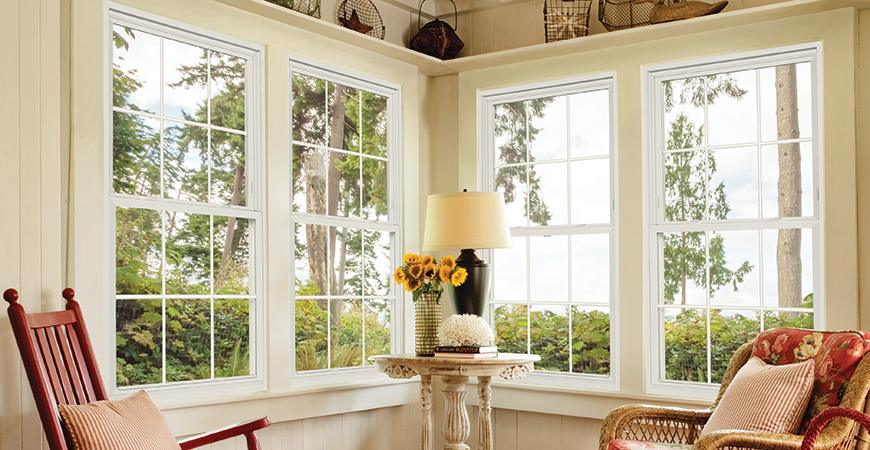
Argon gas is sealed in the space between glass panes on double- or triple-pane windows. Argon slows heat trying to pass through glass, helping your home stay more energy efficient. It’s clear, odorless and won’t affect the view out your windows. You won’t even notice the argon’s there.
In summer, argon gas can help keep outdoor heat from pouring through your windows and overheating your home. In winter, it helps keep warm indoor air from being displaced by cold outdoor air. Your home will stay more comfortable, and your HVAC system won’t have to work overtime. This adds up to measurable energy savings over time.
Argon glass is just one component of many modern energy-efficient windows’ insulated glass units (IGUs). Other features may include:
- Warm-edge spacers that hold separate panes apart and distribute heat around the pane.
- Seals around the edges of the pane, which help keep the gas in and moisture out.
- Weatherstripping, a special type of seal which works in conjunction with the windows’ moving parts to help control air flow.
- Low-E glass, which has been microscopically treated to block harmful UV and infrared light that can overheat spaces and fade interior decorations.
- Multi-chamber framing, which slows air trying to escape through the window edge.
All together, these various components will create a balanced, solid window unit that protects your home against the elements.
Air vs. Argon vs. Krypton: What’s the Difference?
When comparing multi-pane windows, you’ll likely see a variety of gas insulations available. Standard air is often used between panes, but it doesn’t provide the same level of insulation as a gas.
Because argon gas is denser than air, some of its benefits include:
- Better insulation that slows heat transfer into your space.
- Balanced heat distribution across the glass, which prevents condensation.
- Added outdoor noise reduction.
- Stronger UV ray resistance.
Argon is also a fairly inexpensive gas, especially when compared to costly alternatives like krypton. It offers great value and long-lasting performance benefits.
How Long Does Argon Last, and Can It Leak Out?
Argon is a long-lasting glass insert that can provide exceptional insulation. A very small amount of the gas may naturally dissipate from between the panes as time passes. However, the National Fenestration Rating Council (NFRC) Consumer Guide notes that the leakage rate on energy-efficient windows is only about 0.5% per year. At that rate, even after 20 years, the window would still perform at 90% of its original capacity.
Minimal argon seepage around your windows over time is normal. The only real issue arises if window damage, broken glass or broken seals cause the gas to leak faster than it should. The extra leakage is not a health or safety risk for you and your family. However, it will cause your window’s energy efficiency to drop, and you will likely need to replace the window. If you notice condensation between the window glass, it’s a sign that there’s a problem worth investigating.
Are Argon-Filled Windows Worth It?
Windows with argon gas are certainly worth considering for your Colorado home. However, argon gas is just one piece of a larger picture. Modern windows contain various energy-efficient features that help your windows manage heat, light, humidity and drafts as they occur.
Many windows contain energy rating labels that make it easier to compare your options. They’ll contain a variety of data that explains your window’s performance. This includes:
- U-factors: Measures how well a product limits heat loss. A lower number indicates better insulation.
- Solar heat gain coefficients (SHGC): Describes how much solar heat enters through the product. Higher numbers allow in more heat.
- Air leakage (AL) ratings: Measures airflow through the product, showing how well it avoids drafts.
- Visible transmittance (VT): Explains how much light enters your home. Higher values mean more light.
The combination of these factors, alongside components like argon gas, can help you determine the right performance balance for your windows. For more information on choosing windows that are a good fit for Colorado’s climate, altitude and your specific home, check out our energy-efficient window guide.
Does Denver’s Altitude Affect Argon Gas Windows?
Any window package needs to be a good fit for the location where it’s installed. In high-altitude Denver, this means considering how elevation may affect your window purchasing decision.
Windows with argon gas have tight seals that minimize seepage over the life of your product. However, if windows are manufactured and sealed at a lower altitude and transported to higher altitudes, there’s a risk that the change in air pressure will damage the seal. Windows may then shed argon gas much faster and fail to provide adequate energy efficiency.
The good news is that window manufacturers have already thought ahead. Windows designed for high-altitude locations may be factory-equalized, meaning they’re sealed under conditions designed to mimic your target location. Be sure to let professional installers place your new windows, since they’ll know the precise ways to handle the project to avoid damaging the frame, glass and seals.
Don’t Forget To Ask About Your Specific Home
Beyond confirming that your new windows are designed for higher elevations, also consider whether they are the right fit for their specific locations within your home. A south-facing window will receive a very different amount of light and heat than a window that faces due west. Therefore, you may need different R-values, SHGCs and other energy ratings between the windows.
Find the Right Replacement Windows for Your Denver Home
Argon gas is just one of many energy-efficient window features that can keep Colorado homes cozy while lowering high utility costs. If you’re curious about whether it’s a good fit for your window package, Window World of Denver is happy to help you understand your options.
As experts in all the ins and outs of energy-efficient windows for high-elevation homes, we’ve successfully completed upgrades in Denver, Aurora, Thornton, Lakewood, and communities throughout the region. We’re happy to be your partners in creating a home you’ll love.
Request your free estimate today!
Frequently Asked Questions
What is argon gas in windows?
Argon gas is a clear, odorless, non-toxic gas. It is placed between the panes of multi-pane windows to provide extra insulation. Argon reduces the amount of heat transfer through your windows compared to natural air. That way, it helps your interiors stay more comfortable year-round.
How long does argon gas last in windows?
Argon gas can last for many years in your windows, although a small amount of dissipation over time is normal. The NFRC estimates that energy-efficient argon-fill windows only lose about 0.5% per year. So, even if your windows are 20 years old, they might still have 90% of their original argon capacity. Broken glass, damaged seals and other issues with your windows may increase leakage.
What’s the difference between argon gas fills and low-E glass?
Argon gas goes between the window panes on multi-pane windows to slow heat transfer. Low-E glass is a microscopically thin coating that goes on the glass itself. It blocks harmful UV and infrared light that can overheat rooms and fade furniture.